When Amazon first launched the Echo line back in 2014, smart speakers were a novelty. Today, they’re as common as microwaves, and choosing the right one can make or break your smart home experience. Amazon’s current lineup spans from budget-friendly options to premium audio powerhouses, with the Echo Dot 5th Generation and Echo Studio representing opposite ends of this spectrum.
At the time of writing, these two speakers sit roughly $150-200 apart in price, but that gap represents far more than just a few extra features. We’re talking about fundamentally different approaches to what a smart speaker should be and do in your home.
Understanding Smart Speaker Categories
Smart speakers have evolved into three distinct categories: budget voice assistants, balanced all-rounders, and premium audio devices. The Echo Dot 5th Generation firmly plants itself in the first category, prioritizing affordability and convenience. The Echo Studio dominates the third, focusing on audio quality that can genuinely replace a traditional stereo system.
This distinction matters because your choice affects everything from where you can place the speaker to how much you’ll enjoy your daily music listening. Budget speakers excel at voice commands, timers, and basic music playback. Premium speakers transform how music sounds in your space but demand more commitment in terms of cost and placement.
The key considerations boil down to: How important is audio quality to your daily routine? How much space do you have? And how many rooms need Alexa access?
The Tale of Two Generations
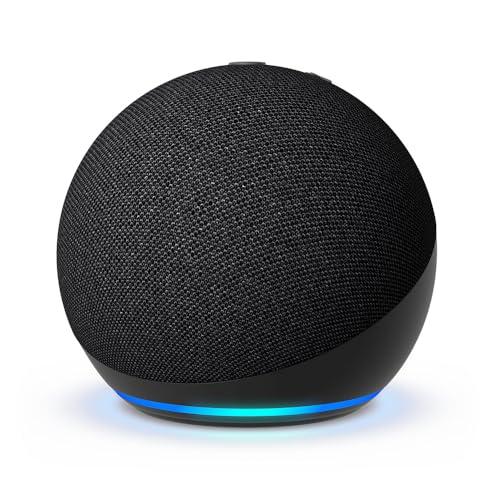
The Echo Dot 5th Generation launched in 2022 as Amazon’s latest attempt to perfect the “smart speaker in every room” concept. Compared to earlier Dots, this version represents a significant audio upgrade while maintaining the compact footprint that made the line popular. The improvements aren’t revolutionary, but they’re meaningful—especially the enhanced bass response that previous generations sorely lacked.
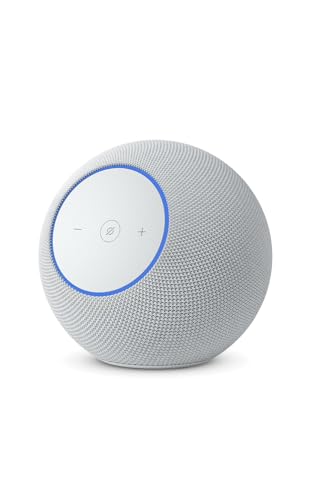
The Echo Studio first arrived in 2019, with Amazon positioning it as their answer to premium speakers from Sonos and other audio-focused brands. A refreshed version launched more recently with improved processing power and a smaller footprint, though it remains substantially larger than any Dot. The Studio was Amazon’s declaration that Echo devices could be serious audio equipment, not just convenient voice assistants.
Both devices have benefited from regular software updates since launch, but the fundamental hardware differences established at release remain the defining factor in their capabilities.
Audio Performance: Where the Real Differences Emerge
The Hardware Foundation

The most obvious difference between these speakers lies in their audio hardware, and the gap is enormous. The Echo Studio employs what’s called a multi-driver system—essentially multiple specialized speakers working together. It features five distinct speakers: a large 5.25-inch woofer (the speaker responsible for deep bass), three 2-inch midrange drivers (handling vocals and most instruments), and a 1-inch tweeter (producing crisp high-frequency sounds like cymbals).
This configuration allows each speaker component to focus on what it does best, rather than asking one driver to handle all frequencies. The result is cleaner sound with better separation between instruments and more accurate reproduction of the original recording.
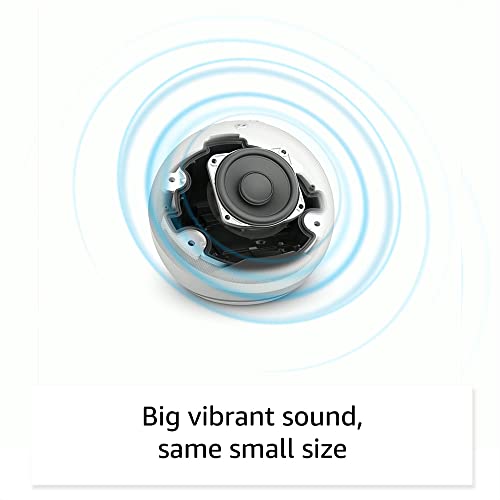
The Echo Dot 5th Generation, by contrast, uses a single 1.73-inch driver. This full-range driver must handle everything from deep bass to sparkling highs, which inevitably means compromises. It’s like asking one person to play every instrument in an orchestra versus having specialists for each section.
Power and Volume Capabilities
The Echo Studio can push 200 watts of power, enabling it to fill large rooms with sound while maintaining clarity. Our research shows it can reach up to 91.1 dB SPL (sound pressure level)—loud enough for parties without significant distortion. The Echo Dot doesn’t publish power specifications, but real-world testing suggests it’s optimized for near-field listening in smaller spaces.
This power difference becomes crucial when you consider room size. The Studio can energize a living room or open-concept space, while the Dot excels in bedrooms, kitchens, or office spaces where you’re typically within 6-10 feet of the device.

Audio Processing and Enhancement
Here’s where things get technically interesting. The Echo Studio includes automatic room adaptation technology, which continuously analyzes your room’s acoustics and adjusts the sound accordingly. If you place it near a wall, it reduces bass to compensate for boundary reinforcement (the bass boost that naturally occurs when speakers are close to surfaces). In an open space, it maintains fuller low-end response.
The Studio also supports Dolby Atmos, a spatial audio technology that creates the illusion of sound moving around and above you. When you play compatible content, instruments can seem to float in three-dimensional space rather than coming from a single point. This isn’t just marketing fluff—when it works well with properly mastered content, the effect can be genuinely impressive.
The Echo Dot 5th Generation lacks these advanced processing features but compensates with simplicity and consistency. What you hear is what you get, without complex algorithms trying to outsmart your room’s acoustics.
Real-World Audio Performance
Based on extensive user feedback and professional reviews, the Echo Studio delivers genuinely impressive sound quality for its price point. The bass extends surprisingly low, vocals remain clear even at higher volumes, and the overall presentation feels spacious and engaging. However, some reviewers note that the bass can occasionally be “overcooked”—emphasized to the point where it dominates the mix more than it should.

The Echo Dot 5th Generation punches well above its weight class. While it can’t match the Studio’s power or frequency range, it produces remarkably balanced sound for such a small device. The 5th generation’s improved driver delivers noticeably better bass than previous Dots, making casual music listening more enjoyable. The limitation comes at higher volumes, where distortion creeps in and the single driver begins to struggle.
For perspective, the Studio competes reasonably well with dedicated bookshelf speakers in the $200-300 range, while the Dot outperforms most similarly-sized Bluetooth speakers but can’t challenge larger audio equipment.
Smart Home Integration: Beyond Just Playing Music
Hub Capabilities and Device Control
The Echo Studio includes a built-in Zigbee hub, which is more significant than it might initially sound. Zigbee is a wireless communication protocol specifically designed for smart home devices—think of it as a specialized language that smart lights, locks, and sensors use to talk to each other. Having this hub built into the speaker means you can control compatible devices directly without purchasing a separate hub device, potentially saving $50-100 and reducing network complexity.
This integration particularly benefits users building extensive smart home systems. You can control Philips Hue lights, Samsung SmartThings sensors, and dozens of other Zigbee devices through voice commands or automated routines without additional hardware.
The Echo Dot 5th Generation takes a different approach, incorporating sensors that enable unique automation possibilities. Its built-in temperature sensor can trigger routines based on ambient conditions—automatically turning on a space heater when the room gets cold, for example. The ultrasound motion sensor detects when someone enters or leaves the room, enabling presence-based automation like turning lights on when you wake up.
Voice Recognition and Response
Both devices feature Alexa’s full voice assistant capabilities, but their microphone arrays differ significantly. The Echo Studio uses seven far-field microphones arranged to pick up voice commands from across the room, even when music is playing loudly. The Echo Dot has fewer microphones but incorporates Amazon’s newer AZ2 Neural Edge Processor, which processes voice commands faster than previous generations.
In practice, both devices excel at voice recognition in typical home environments. The Studio’s advantage emerges in challenging conditions—noisy rooms, background music, or commands shouted from across an open floor plan.
Design Philosophy and Practical Placement
Physical Footprint and Room Integration
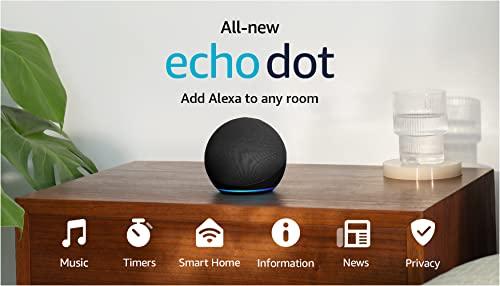
The Echo Dot 5th Generation measures roughly 4 inches in diameter and weighs less than a pound, making it incredibly versatile for placement. You can tuck it onto a nightstand, mount it on a wall, or place it on a kitchen counter without dominating the space. The fabric covering and subtle LED ring blend into most home décor styles.
This compact design enables a “distributed approach” to smart speakers—placing multiple Dots throughout your home for comprehensive voice control coverage. Many users find this more practical than having one central high-quality speaker, especially in multi-story homes or layouts with separate living areas.
The Echo Studio demands more consideration. Even the newer, smaller version requires significant surface space and visual attention. At roughly 7 inches tall and weighing several pounds, it’s a commitment to place in your living space. However, this size serves a purpose—the larger enclosure allows for better bass response and more powerful drivers.
Aesthetic Integration
The Studio’s design philosophy assumes it will be visible and central to your audio setup. The premium fabric covering and subtle curves look intentional rather than hidden. The Dot’s approach prioritizes invisibility—it’s designed to disappear into your home’s ecosystem rather than announce its presence.
Connectivity and Future-Proofing
Input and Output Options
The Echo Studio includes both 3.5mm auxiliary and optical (Toslink) inputs, allowing you to connect external devices like turntables, CD players, or televisions. This versatility transforms it from a standalone speaker into a hub for multiple audio sources.
The Echo Dot 5th Generation notably removed the 3.5mm output jack that previous generations included, limiting expansion options. This decision reflects Amazon’s focus on wireless connectivity and streaming services over traditional wired audio setups.
Network and Wireless Capabilities
Both devices support dual-band Wi-Fi and Bluetooth connectivity. The Dot can function as an eero mesh network extender when paired with compatible Amazon routers, potentially improving Wi-Fi coverage throughout your home. This feature won’t matter to most users but adds value for those already invested in Amazon’s networking ecosystem.
Home Theater Applications
The Echo Studio shines in home theater applications, particularly when paired with Amazon’s Fire TV devices. It can serve as a wireless soundbar alternative, providing significantly better audio than television speakers while supporting advanced formats like Dolby Atmos for movie content.
For smaller TVs or bedroom setups, a single Studio delivers impressive results. The spatial audio processing creates a sense of width and immersion that traditional soundbars in similar price ranges often can’t match. However, for larger rooms or more demanding audio applications, you’d still want to consider dedicated home theater equipment.
The Echo Dot isn’t designed for home theater use, though it can handle basic audio from streaming devices via Bluetooth. Its single driver and limited power output make it unsuitable for movie dialogue or sound effects that demand clarity and dynamic range.
Value Propositions and Target Users
The Case for Multiple Dots
At the time of writing, you could potentially buy four or five Echo Dot 5th Generation speakers for the price of one Echo Studio. This math changes the entire equation for many households. Multiple Dots enable Alexa access in every room, creating a truly integrated smart home experience where voice commands work everywhere.
This distributed approach particularly appeals to families with children, who benefit from voice-controlled timers in multiple rooms, or households where different family members spend time in various spaces throughout the day. The ability to drop in on other rooms, make announcements, or play synchronized music throughout the house often proves more valuable than superior audio quality in a single location.
The Studio’s Premium Proposition
The Echo Studio targets users who prioritize audio quality above convenience factors. If you currently use a traditional stereo system, frequently listen to music as a focused activity, or entertain guests regularly, the Studio’s superior sound quality justifies its premium positioning.
The Studio also appeals to those building consolidated entertainment systems. Rather than separate purchases for a smart speaker, soundbar, and smart home hub, the Studio combines these functions into a single device. While this approach costs more upfront, it can reduce total system complexity and cost.
Performance Metrics That Matter Most
Audio Quality Hierarchy
Based on our research across user reviews and professional evaluations, audio quality preferences break down predictably:
- Frequency response balance: How natural voices and instruments sound
- Maximum clean volume: How loud the speaker can play without distortion
- Bass extension: How deep and controlled low frequencies sound
- Soundstage width: How spacious and three-dimensional the audio feels
The Echo Studio excels in all four areas, while the Echo Dot performs admirably in the first two categories given its size constraints but can’t compete on bass extension or soundstage width.
Smart Home Integration Priorities
For smart home functionality, the most important capabilities are:
- Voice recognition accuracy: Consistent response to commands
- Device compatibility: Support for your existing smart home ecosystem
- Automation flexibility: Ability to create complex routines
- Network reliability: Stable connectivity and fast response times
Both speakers handle these core functions well, with differences mainly in specialized features like the Studio’s Zigbee hub or the Dot’s environmental sensors.
Making the Decision: Scenarios and Recommendations
Choose the Echo Studio if:
You’re a music enthusiast who values audio quality above other considerations. The Studio transforms casual background listening into an engaging experience and can serve as your primary music system. This makes sense if you frequently listen to full albums, enjoy discovering new music, or host gatherings where audio quality matters.
The Studio also suits users building comprehensive smart home systems who appreciate the built-in Zigbee hub functionality. If you’re planning to invest in smart lighting, security sensors, or automation devices, the consolidated hub capability adds significant value.
Finally, consider the Studio for home theater applications where you want better TV audio without the complexity of a full surround sound system.
Choose the Echo Dot 5th Generation if:
You prioritize flexibility and whole-home coverage over audio quality. Multiple Dots create a more integrated smart home experience than a single premium speaker, especially in larger homes or households with varied routines.
The Dot suits users who primarily use voice assistants for practical tasks—timers, weather updates, smart home control—rather than extended music listening. It excels as a bedside companion, kitchen assistant, or office voice interface.
Budget-conscious users who want Alexa functionality without premium pricing should also lean toward the Dot, especially if audio quality isn’t a primary concern.
The Hybrid Approach
Many users ultimately choose both, using an Echo Studio in their primary living space for serious listening and Echo Dot speakers throughout the rest of their home for convenience and coverage. This combination maximizes both audio quality where it matters most and voice assistant accessibility everywhere else.
The math often works in favor of this approach—one Studio plus two or three Dots might cost similar to some single premium speakers while providing more comprehensive functionality.
Final Thoughts
The choice between the Echo Studio and Echo Dot 5th Generation ultimately reflects your priorities and living situation. These aren’t competing products as much as they’re different solutions to different problems.
The Studio represents Amazon’s vision of smart speakers as serious audio equipment that happens to include voice control. It succeeds admirably in this role, delivering sound quality that competes with dedicated speakers while adding smart home functionality.
The Dot embodies the original Echo promise: making voice assistants accessible, affordable, and unobtrusive. It proves that you don’t need premium pricing to get meaningful smart home functionality, though audio quality necessarily takes a back seat.
Both speakers have found their audiences because they excel at their intended purposes. Your decision should align with whether you value audio excellence in a single location or practical voice assistance throughout your entire home. Either choice will deliver on Amazon’s core promise of making your daily routines more convenient—just through different approaches to the same goal.
| Amazon Echo Studio Smart Speaker | Amazon Echo Dot 5th Generation Smart Speaker |
|---|---|
| Audio Hardware – Determines sound quality and room-filling capability | |
| 5-speaker array: 5.25″ woofer, 3x 2″ midrange, 1″ tweeter | Single 1.73″ full-range driver |
| Maximum Volume – How loud it can play without distortion | |
| Up to 91.1 dB SPL, suitable for parties and large rooms | Optimized for close-range listening, distorts at high volumes |
| Smart Home Hub – Controls devices without additional hardware | |
| Built-in Zigbee hub for direct smart device control | No hub capability, but includes temperature and motion sensors |
| Audio Input Options – Connects external devices like turntables or TVs | |
| 3.5mm AUX and optical (Toslink) inputs | No audio inputs (removed from previous generation) |
| Advanced Audio Features – Immersive sound technologies | |
| Dolby Atmos, spatial audio, automatic room adaptation | Basic audio processing, no spatial or hi-res support |
| Physical Size – Affects placement flexibility | |
| 8.1″ tall, 6.9″ diameter, 7.7 lbs (requires dedicated space) | 3.94″ diameter, 3.15″ tall, 0.66 lbs (fits anywhere) |
| Power Requirements – Portability and placement constraints | |
| Wired AC power only, 200 watts | Wired AC power only, low power consumption |
| Multi-Room Strategy – How to cover your entire home | |
| Premium single-room solution, pairs for stereo | Budget-friendly multiple unit deployment |
| Home Theater Use – TV and movie audio enhancement | |
| Excellent Fire TV pairing, Dolby Atmos for movies | Not suitable for home theater applications |
| Voice Recognition – Pickup quality in noisy environments | |
| 7 far-field microphones, works well with loud music | Standard microphone array with faster AZ2 processor |
Amazon Echo Studio Smart Speaker Deals and Prices
Amazon Echo Dot 5th Generation Smart Speaker Deals and Prices
Which Amazon Echo speaker has better sound quality?
The Amazon Echo Studio delivers significantly better sound quality with its 5-speaker array including a 5.25-inch woofer, three midrange drivers, and a tweeter. The Amazon Echo Dot 5th Generation uses a single 1.73-inch driver that’s suitable for casual listening but can’t match the Studio’s audio performance, bass depth, or maximum volume capabilities.
What’s the main difference between Echo Studio and Echo Dot 5th Generation?
The primary difference is audio focus versus convenience. The Amazon Echo Studio is designed as a premium music speaker with room-filling sound, Dolby Atmos support, and multiple audio inputs. The Amazon Echo Dot 5th Generation prioritizes affordability and compact size for placing Alexa access throughout your home at a fraction of the cost.
Can I use Echo Studio or Echo Dot for home theater?
The Amazon Echo Studio works excellently for home theater, especially when paired with Fire TV devices. It supports Dolby Atmos and can serve as a wireless soundbar alternative with much better audio than TV speakers. The Amazon Echo Dot 5th Generation is not suitable for home theater use due to its limited power and single small driver.
Which Echo speaker is better for multiple rooms?
The Amazon Echo Dot 5th Generation is ideal for multiple rooms due to its affordable price point, allowing you to place voice control and basic audio throughout your entire home. The Amazon Echo Studio is better as a single high-quality speaker for your main listening area rather than deploying multiple units.
Do both Echo speakers have the same Alexa features?
Yes, both the Amazon Echo Studio and Amazon Echo Dot 5th Generation offer identical Alexa voice assistant capabilities including smart home control, music streaming, timers, and information queries. The difference lies in audio quality and specialized features like the Studio’s built-in Zigbee hub or the Dot’s temperature sensor.
Which Echo speaker is better for small spaces?
The Amazon Echo Dot 5th Generation is perfect for small spaces like bedrooms, kitchens, or offices due to its compact 4-inch diameter and lightweight design. The Amazon Echo Studio requires more surface space and is better suited for larger rooms where its superior audio performance can be fully appreciated.
Can I connect external devices to these Echo speakers?
The Amazon Echo Studio includes both 3.5mm auxiliary and optical inputs for connecting turntables, CD players, or TVs. The Amazon Echo Dot 5th Generation removed the audio output jack from previous generations and relies solely on wireless connectivity via Bluetooth and Wi-Fi.
Which Echo speaker has better smart home integration?
The Amazon Echo Studio includes a built-in Zigbee hub for directly controlling smart home devices without additional hardware. The Amazon Echo Dot 5th Generation lacks hub functionality but offers unique sensors including temperature monitoring and motion detection for automated routines.
How loud can each Echo speaker get?
The Amazon Echo Studio can reach up to 91.1 dB SPL with 200 watts of power, making it suitable for parties and large rooms without distortion. The Amazon Echo Dot 5th Generation is optimized for close-range listening and begins to distort when pushed to higher volumes.
Which Echo speaker supports high-quality audio formats?
The Amazon Echo Studio supports high-resolution audio up to 24-bit/192kHz, Dolby Atmos, and spatial audio formats for an immersive listening experience. The Amazon Echo Dot 5th Generation handles standard audio formats but doesn’t support hi-res, spatial, or advanced audio processing features.
Can I pair these Echo speakers together?
Yes, both the Amazon Echo Studio and Amazon Echo Dot 5th Generation support multi-room audio and can be grouped together for synchronized playbook throughout your home. You can also pair two Echo Studio speakers for stereo separation, though this significantly increases the total cost.
Which Echo speaker offers better value?
The Amazon Echo Dot 5th Generation offers exceptional value for basic smart speaker needs, whole-home coverage, and casual music listening. The Amazon Echo Studio provides better value for serious music listeners who prioritize audio quality and want features like Dolby Atmos and smart home hub functionality in a single device.