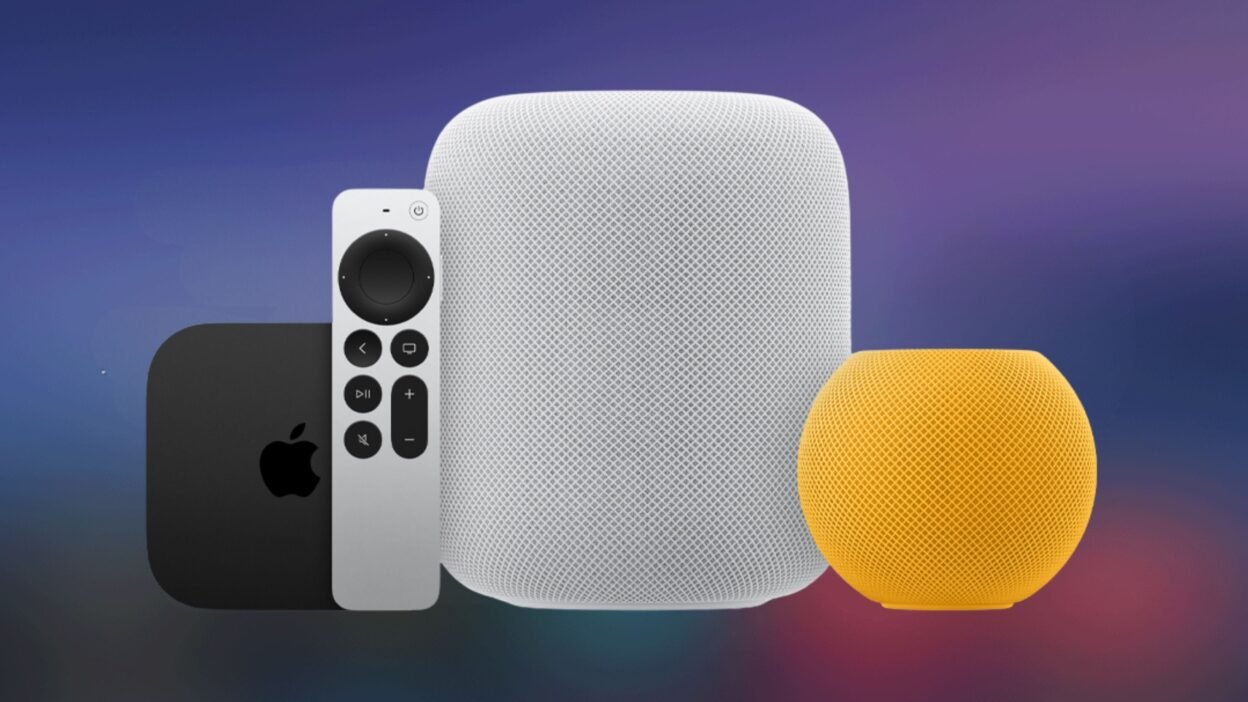
The holdup affects a new Apple TV 4K, HomePod 3, HomePod mini 2, and a smart home display sometimes called “HomePad.” Gurman reported these devices could have launched last year but are waiting for Apple Intelligence and new Siri features to be finalized.
Siri’s AI overhaul was first expected in March 2025 before being delayed into iOS 26. The first iOS 26.5 beta arrived earlier this month without the promised changes, with reporting increasingly pointing to iOS 27 as the major Siri release window.
Apple already delivered a burst of hardware announcements in early March. The company unveiled the iPhone 17e on March 2 with MagSafe support missing from its predecessor, plus an A19 chip and Ceramic Shield 2 for improved durability.
The same day brought an iPad Air refresh with M4 chip in both 11-inch and 13-inch sizes.
March 3 and 4 introduced the $599 MacBook Neo as a new entry-level laptop category alongside M5 versions of the MacBook Air and MacBook Pro. The company also refreshed Studio Display models and launched AirTag 2 in January after four years.
Despite these releases, Apple’s roadmap still includes major hardware changes for later this year. A foldable iPhone with book-style design featuring both outer and inner displays could arrive alongside iPhone 18 Pro and Pro Max models in September.
The company may skip the standard iPhone 18 this year as part of a staggered release strategy that would push it to early 2027 instead.
Mac updates continue through mid-year with a new Mac Studio expected around June featuring upgraded M5 Max and M5 Ultra chips. According to reports, the M5 Ultra could deliver around 36 CPU cores and up to 80 GPU cores by fusing two Max dies together.
Benchmarks for the M5 Ultra are reportedly nearing 41,000 in multi-core performance according to Geeky Gadgets data cited by eWeek. That would represent the largest jump seen in Apple’s Ultra lineup to date.
Storage configurations are changing too. The M5 Max version is expected to ship with a 1TB SSD as standard instead of the current 512GB, while the M5 Ultra starts at 2TB rather than 1TB.
Pricing pressure comes from supply chain challenges acknowledged by CEO Tim Cook during a recent earnings call. He noted “less flexibility in the supply chain than normal” with wholesale memory pricing “increasing significantly.”
When Apple refreshed the MacBook Pro with M5 Max earlier this month, it removed the lower-storage entry tier entirely. That pushed the starting price to $3,599 by making a 2TB SSD standard instead of optional.
A similar approach with Mac Studio could raise its entry point above $1,999 from current pricing of $1,999 for M4 Max models and $3,999 for M3 Ultra configurations.
Later this year might bring Apple’s first touchscreen Mac display as part of a high-end OLED MacBook redesign. The company is also reportedly developing new low-cost iPad models possibly using A18 or A19 chips to support AI features.
iPad mini could switch from LCD to OLED display technology later this year for improved contrast and brightness compared to current models.
Apple Watch Series 12 arrives in September alongside new iPhones but will likely focus on internal improvements rather than design changes according to industry reports cited by eWeek.
Advanced health features like non-invasive blood glucose monitoring remain several years away despite ongoing development work within Apple’s health technology division.
AirPods Pro equipped with tiny infrared cameras designed to interact with Apple Intelligence represent one of more unusual rumors circulating about future products according to eWeek reporting based on multiple sources familiar with development plans.