 3 min read
- I tried a few different options before I purchased the Philips ST19 Vintage Edison Smart LEDs to warm up my space.
- The bulbs are app-controlled, with options for dimming or staggered effects.
- They can run on timers, which I’ve found to be a helpful feature for not wasting energy.
I’ve been reluctant to hop on the LED train, even though I know they’re more efficient, safer, and longer-lasting than incandescent bulbs. I think it’s a nostalgia thing. The early 2000s were defined by “Tuscan” decor—living rooms filled with dark wood, formal furniture, and a familiar, warm glow. That kind of lighting takes me back, and it’s something I’ve found myself longing for.
My search for the right bulb began in mid-February and involved more than one trip to Home Depot (try three, to be exact). It wasn’t easy. The bulbs were either too orange, too blue, or incompatible with the fixtures in my home. After some trial and error—and one broken bulb later—I finally settled on the Philips ST19 Vintage Edison Smart LEDs.

Cons
- Initial app pairing took some troubleshooting

Philips ST19 Vintage Edison Smart LED Light Bulbs, Reviewed
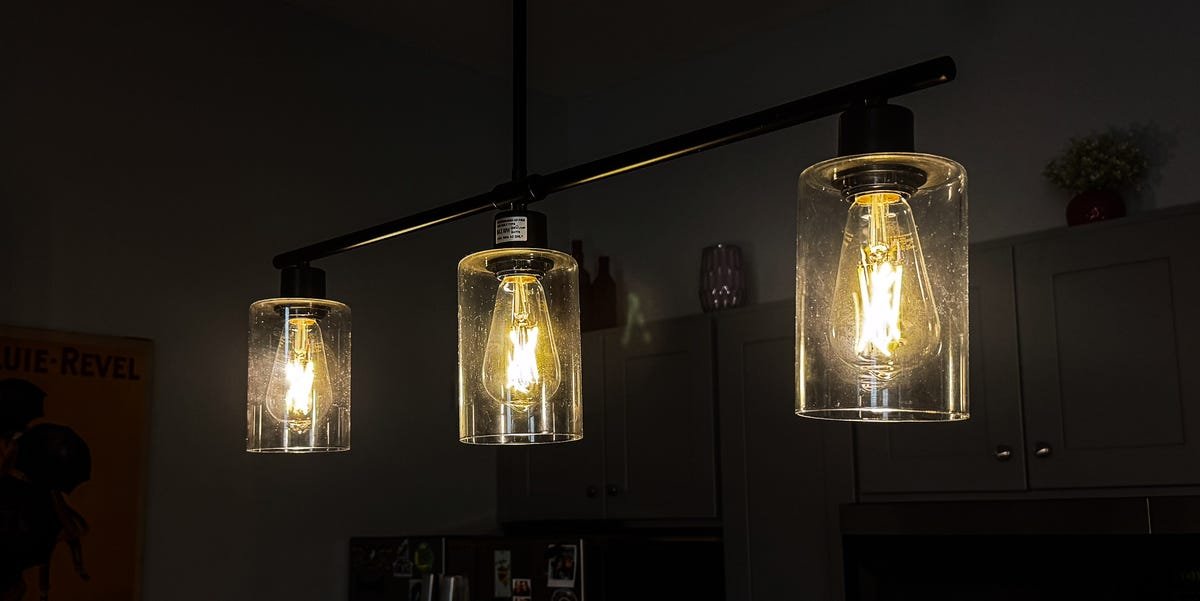
I have ceiling lights in my apartment, but I rarely use them in favor of other ambient lighting like lamps, TV backlighting, and string lights. Over my kitchen island, I have a three-pendant fixture, and it became my first target when shopping for new bulbs. I love to cook, and since the kitchen is one of the first things you see when you walk through my front door, the lighting here really matters.
I started with the amber-colored bulbs from the same Philips series, but they were far too orange, more like a 1970s bar than the cozy, inviting glow I was after. They were also a lot dimmer than I expected. Switching to the clear version made a big difference. Installation was quick and easy, and I immediately noticed how much better the room felt when I turned them on. The light was warm without being overly yellow, and bright enough to fill the space without that harsh, typical LED feel.

By flipping the light switch twice, I can toggle between warm and cool lighting. I almost never use the cooler setting, but it’s nice to at least have the option if I wanted a brighter, more neutral tone.
Pairing the bulbs with the WiZ app was less seamless than I expected. Even following the on-screen instructions, I had trouble getting all three bulbs to connect at once. After unscrewing, reinstalling, and a few rounds of flipping the switch, I finally got everything up and running. This wasn’t a deal breaker since the bulbs still work like normal lights without the app, but I would have missed out on the smart features if I couldn’t get it to work.

And those features are worth it. I’ve enjoyed experimenting with different settings depending on the time of day. With plenty of natural light coming through my windows, I don’t really need full brightness during the day, so being able to dim the bulbs is a big plus. You can even adjust each bulb individually, which makes it easy to create a more layered, staggered lighting effect.
These bulbs also pair with smart home systems like Google Assistant and Amazon Alexa. I like being able to set up timers and schedule when the lights turn on and off in the app—something my parents would have loved when I was a kid, considering leaving a light on in my empty room felt like a personal attack on the electric bill.
Overall, I’ve been pleasantly surprised by the switch to LED bulbs. I’ve since updated the bulbs in my lamps and bathroom fixtures as well. With this Philips design, I don’t have to completely give up the warm, nostalgic feel of incandescent lighting. I just found a smarter way to get there.
Other Smart Home Tech We Recommend


Amber is a Reviews Editor with bylines on Popular Mechanics, Runner’s World, Bicycling, and Best Products sites. Specializing in kitchen gadgets, small appliances, lifestyle, and consumer tech, she brings hands-on testing and a detail-oriented approach to every review. In her free time you can likely find her trading trinkets at an EDM festival, searching for hidden gems at thrift stores, or cuddling with her two cats.
Colin Aylesworth attended Binghamton University and is a Deputy Editor with the Gear team at Popular Mechanics and Runner’s World, where he has been since 2022. Prior to joining Hearst Magazines, he worked for 11 years at U.S. News and World Report on the autos team.
His personal pursuits fit in well with the work he does for PM and RW. Aylesworth was on his college’s club rowing team and has maintained a routine running habit through most of his adult life as a means of getting exercise and spending time outdoors. Running creates a hearty appetite, which brings us to Popular Mechanics. That publication’s expertise in the area of grilling is relatable to Aylesworth, who is an adherent to charcoal grilling. In fact, he’s been primarily using the same Weber charcoal kettle he bought on Craigslist in 2012.
Aylesworth also has experience in the lawn mower industry. Not only has he been mowing his and neighbor’s lawns during adolescence, one of his more recent endeavors is a side gig of repairing and restoring gas lawn mowers given up by their previous owners. Since joining PM, he has gotten more involved with the publication’s mower testing efforts and especially enjoys testing out new electric and zero turn mowers.