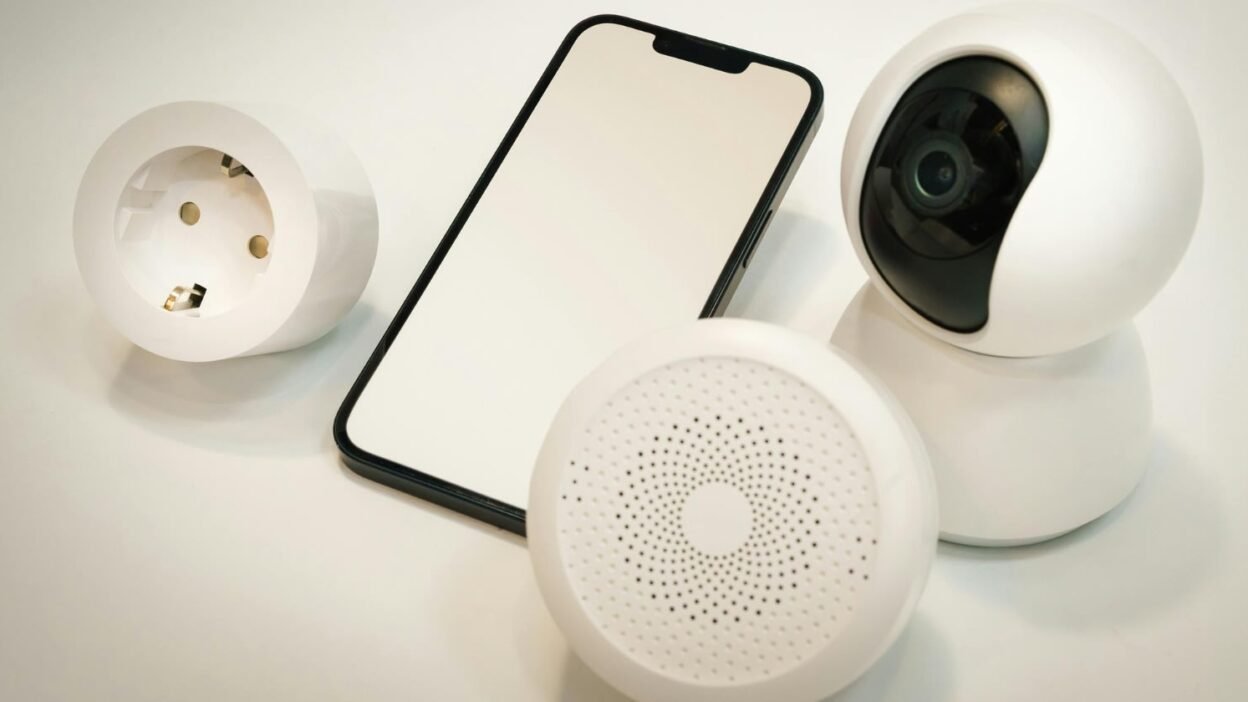
According to Renub Research Latest Report smart speaker market is on an impressive growth trajectory, expected to surge from USD 9.60 billion in 2024 to USD 57.48 billion by 2033, achieving a CAGR of 22% from 2025 to 2033. This expansion is fueled by the rising adoption of voice assistants, integration with smart home ecosystems, and advancements in AI technology, alongside increasing consumer demand for hands-free convenience and entertainment.
Smart speakers, AI-powered devices with embedded virtual assistants such as Amazon Alexa, Google Assistant, and Apple Siri, are transforming the way people interact with technology. From playing music and setting reminders to controlling connected home devices and retrieving real-time information, these devices have become essential components of modern homes and workplaces.
Global Smart Speaker Industry Overview
A smart speaker is essentially a voice-activated digital assistant that simplifies tasks and enhances daily efficiency. These devices allow users to manage lighting, thermostats, security cameras, and entertainment systems, contributing to the rise of fully automated smart homes. Beyond personal use, smart speakers are increasingly applied in commercial environments, including offices, hotels, and retail outlets, to optimize operations and improve customer experience.
The market’s growth is strongest in North America, Europe, and Asia-Pacific, where consumers are quick to adopt emerging technologies. Continuous software updates and AI improvements have made smart speakers smarter, capable of recognizing complex commands, supporting multiple languages, and integrating with diverse IoT ecosystems.
Rising Adoption of Smart Home Technology
The proliferation of smart home devices is a primary driver of smart speaker demand. Smart speakers serve as central control hubs, managing appliances such as lights, security cameras, air conditioners, and audio systems. Consumers increasingly rely on voice commands to automate their homes, simplifying daily routines and enhancing convenience.
The Internet of Things (IoT) plays a critical role in this growth. IoT devices connected globally numbered 16.6 billion in 2023, up 15% from 2022, and are projected to reach 40 billion by 2030. As smart home ecosystems expand, the demand for smart speakers as essential home automation tools is expected to rise steadily.
Advancements in Voice Recognition and AI
AI-powered virtual assistants have revolutionized smart speaker capabilities. Platforms like Amazon Alexa, Google Assistant, and Apple Siri enable contextual understanding, personalized recommendations, and natural interactions, making devices more user-friendly. Voice recognition technology also enhances accessibility for the elderly and visually impaired, expanding adoption.
Recent innovations, such as BrainBox AI’s ARIA, demonstrate the growing application of AI in commercial and retail spaces. ARIA leverages generative AI to optimize building operations, anticipating issues and streamlining facility management—showing how smart speakers and AI assistants can transcend personal use to commercial operations.
Demand for Hands-Free Convenience
Consumers increasingly prefer hands-free devices for multitasking, from managing schedules to receiving news updates and controlling entertainment systems. Smart speakers have become integral for busy professionals, students, and tech-savvy individuals. In cars, hotels, and offices, voice-controlled systems are gaining popularity. According to DemandSage, 20.5% of global users engage in voice searches, with 27% conducted via mobile devices. In the US, voice assistant users are projected to reach 153.5 million by 2025, highlighting the rising penetration of smart speaker technology.
Challenges Facing the Market
Privacy and Data Security Concerns
Smart speakers continuously listen for voice commands, raising significant privacy concerns. Users worry about unauthorized data collection, storage, and sharing. High-profile data breaches have fueled skepticism, requiring companies to implement stronger encryption, transparent policies, and greater user control to build trust. Resolving these concerns is essential for sustained market growth.
Limited Language and Regional Support
Despite AI advancements, many smart speakers remain focused on English-speaking markets, limiting adoption in regions with diverse languages and dialects. Expanding language support requires extensive data collection and AI training, which can be time-consuming and costly. Companies that fail to address this risk losing potential users in non-English-speaking countries.
👉 For deeper analysis, detailed segment data, and company insights: 🔗 Request Customization Report
Component
Hardware: Microphones, processors, speakers, connectivity modules. Focus on audio quality, durability, noise cancellation, and sleek design. Battery optimization for portable devices is also key.
Software: Cloud services, AI assistants, natural language processing, and machine learning enhance command recognition, personalized responses, and predictive functionality. Software updates provide third-party app access and multilingual support.
Intelligent Virtual Assistants
Amazon Alexa: Market leader with Echo Dot, Echo Show, and Echo Studio. High compatibility with smart home devices and third-party apps.
Google Assistant: Integrated into Google Nest and other devices. Known for search efficiency and smart home control.
Siri: HomePod and HomePod Mini emphasize privacy, premium sound, and Apple ecosystem integration, though limited third-party compatibility is a drawback.
Cortana & Others: Niche presence, often integrated into enterprise or specialized devices.
Connectivity
Wi-Fi: Preferred for multi-room audio, high-speed streaming, and advanced smart home functionality.
Bluetooth: Popular for portable and personal devices, allowing easier integration with smartphones and other gadgets.
Price Range
Low-range (<$100): Entry-level models for budget-conscious users.
Mid-range ($101–$200): Balanced functionality and sound quality.
Premium (>$200): High-end models with superior audio, AI, and ecosystem integration.
Distribution Channel
Online: Amazon, Flipkart, and other e-commerce platforms dominate global sales.
Offline: Electronics retailers, specialty stores, and brand showrooms cater to physical buyers.
End User
Personal: Compact, portable, and AI-customized devices for individual use.
Commercial: Large-scale deployments in offices, retail, hospitality, and public spaces.
Regional Market Insights
United States
The US leads the global market due to high smart home adoption, consumer awareness, and tech-savvy users. Amazon, Google, and Apple dominate, with high demand for voice-driven entertainment and home control.
France
The French market is expanding as consumers embrace AI integration and connected devices. Localized support for the French language and smart home automation drives adoption, though privacy and data security remain challenges.
India
India is a fast-growing market, fueled by low-cost models, high smartphone penetration, and rising smart home adoption. Localized voice assistants in Hindi and regional languages have broadened appeal. Connectivity issues and price sensitivity are ongoing hurdles.
Saudi Arabia
Growth in Saudi Arabia is supported by luxury residences, AI adoption, and Arabic-language voice assistants. Smart speakers are increasingly used in hospitality, retail, and corporate environments. Regulatory frameworks and privacy concerns shape market dynamics.
Competitive Landscape
Leading players drive innovation with R&D, product portfolio expansion, and ecosystem integration:
Amazon.com Inc.: Echo series dominates, with extensive AI capabilities.
Apple Inc.: HomePod and HomePod Mini focus on privacy and premium sound.
Google Nest: AI-driven voice control and smart home integration.
Baidu Inc. & Alibaba Group: Regional leaders in China with localized AI assistants.
Bose & Sonos: High-end audio quality with smart assistant integration.
LG Electronics, Panasonic, Lenovo: Diverse smart speaker portfolios across personal and commercial segments.
Future Outlook
The smart speaker market is poised for sustained expansion, driven by:
AI advancements improving contextual understanding and personalization.
Smart home proliferation, with IoT devices increasing connectivity.
Hands-free convenience, creating new use cases in personal and commercial environments.
Emerging markets, with local language support and affordable devices broadening adoption.
Challenges, including privacy concerns, language limitations, and connectivity issues, must be addressed to unlock the market’s full potential. With companies innovating in both hardware and software, smart speakers are expected to remain central to modern digital life, transforming homes, offices, and commercial spaces globally.
Note: If you need details, data, or insights not covered in this report, we are glad to assist. Through our customization service, we will collect and deliver the information you require, tailored to your specific needs. Share your requirements with us, and we will update the report to align with your expectations.