Cameras are powerful, but they’re not the only (or best) tool for a privacy-respecting smart home. If you want your lights, climate, and media to adapt to you without streaming video to some cloud server, or even needing to store anything on your own network, you can get pretty far using sensors and signals that never leave your network. Here are five practical, privacy-first methods that work great alone, and even better together.
Bluetooth
BLE room presence can be perfect
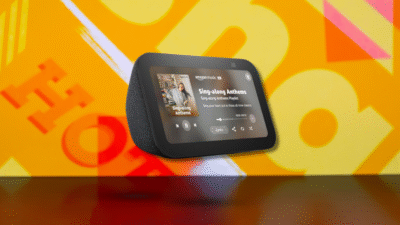
Your phone, watch, and small Bluetooth tags periodically broadcast short messages just to relay that they’re around. Place a few inexpensive Bluetooth listeners around your home, and you can estimate who’s nearby based on signal strength. This could be a smart hub or some ESP32 modules, and this works best when you want personalized presence-activated things, such as lights that match your preferred color, music can follow you, and office gear can boot up when you, not just “someone,” arrives.
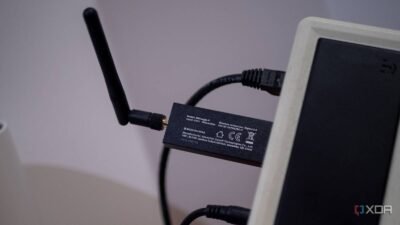
Phones wander between pockets and tables, and RSSI (signal strength) can be noisy indoors, but can be easily tweaked inside something like Bermuda, which XDA’s own Adam Conway used to create his own Find My network. Accuracy may vary significantly, but once you get it calibrated, you can get measured distance pretty close to reality. Assigning multiple identifiers in the form of their phone or smartwatch can help make things more accurate as well. The best part: all of this can run offline on your own hub, and there’s no need to connect to the Internet for this service to work.
Wi-Fi presence detection
Possible in essentially every home

If a device is on your Wi-Fi, it’s a strong hint that the person who owns that device is home. Presence via Wi-Fi is really simple, your router or access point already knows which devices are associated, and tying that to automation gives you a very low-effort way to control devices based on “home” and “away” modes.
To make it rock-solid, you’ll need to give key devices DHCP reservations to ensure their identity stays stable and can be tracked properly, otherwise you’ll lose association with the people who own them. Wi-Fi isn’t practical to make room-accurate, but it’s a good baseline to implement that pairs well with other home sensors.
Motion Sensors
Passive and mmWave

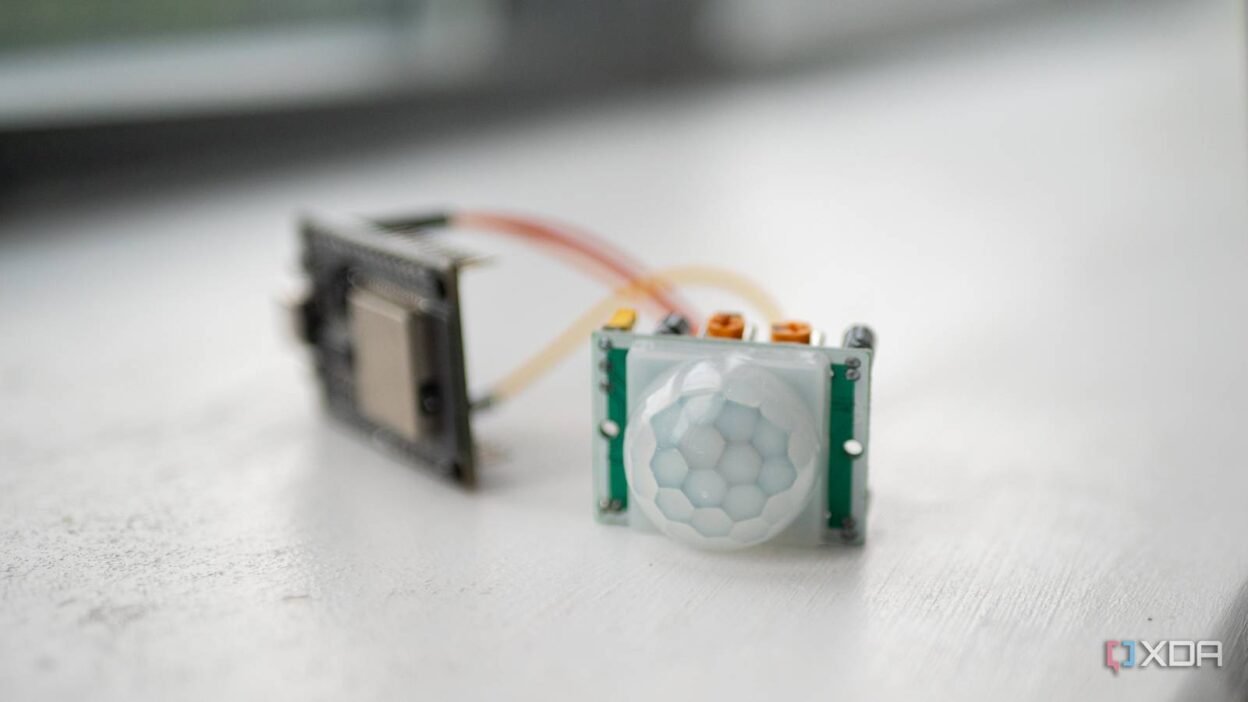
Motion sensors are probably the best way to implement presence detection in your home. The standard passive infrared (PIR) sensors are great for home automation because they detect changes in light when you move, meaning you can flip the lights on, control automations, as well as just send a signal that someone is in that area of your home.
Their main weakness is detection while an object is still. Since the infrared signal doesn’t change if you don’t move, these sensors can be fooled into thinking nobody is in the room. A way to get around this is by using mmWave radar, which senses even the smallest motions. Breathing, typing, slight changes in posture, are all detectable. Setting an mmWave radar at a moderate to low sensitivity for a room can ensure that it’s only sensing movement in that room, not the hallway. While you can’t identify who set off the motion detection with either method, it’s a great way to track if someone is in a specific area of your home.
Smart plugs
Monitoring energy use can be a good indicator

Sometimes the best presence detection isn’t about the people themselves, but rather, the items in your home being used. If the TV is drawing 60 watts, someone is in the living room. If your desktop jumps from 5 W idle to 80 W, you’re at your desk. Energy-monitoring plugs or in-wall modules let you set simple “active” thresholds that translate neatly into occupancy. All without requiring the cloud.
Door Sensors
Especially if you have a lot of them

Few signals are as unambiguous as a door opening. A magnetic contact on the front door combined with a short window of hallway motion is an excellent arrival/leave trigger. Interior contacts are handy as well. Closing an office door can mark the room “occupied” until motion clears, or a bedroom door opening after sunrise can kick off a variety of breakfast automations when combined with smart plugs.
You really don’t need cameras nor the cloud for great presence detection
None of these methods require expensive hardware, cameras, or other invasive cloud-based systems. With a handful of sensors, a local hub, and some tuning, you can design a presence-aware home that feels just as futuristic as a first-party solution, all without giving up control of your own data.