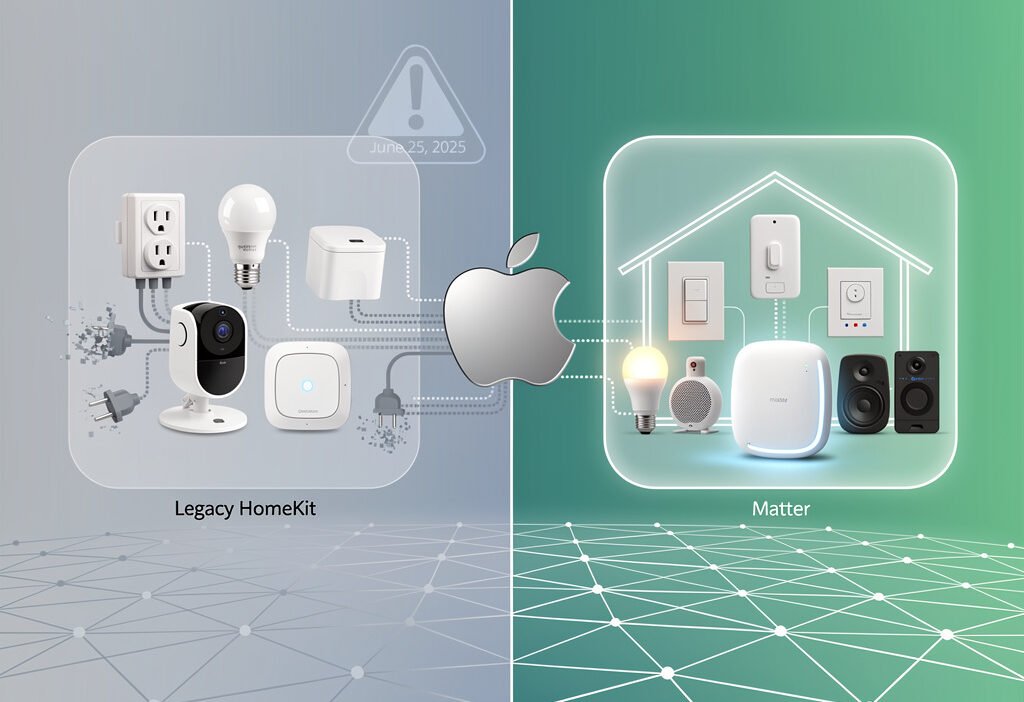
For years, Apple’s HomeKit platform served as the company’s quiet but steady foothold in the smart home market — a curated ecosystem of compatible devices that promised seamless integration with Siri, the Home app, and the broader Apple universe. That era is now coming to an abrupt end. Starting June 25, 2025, Apple will officially discontinue support for its legacy HomeKit Accessory Protocol (HAP), a move that will render an unknown but potentially vast number of smart home devices incompatible with Apple’s ecosystem overnight.
The transition, which Apple first signaled during its Worldwide Developers Conference earlier this month, marks one of the most aggressive platform migrations in the company’s recent history. Unlike typical Apple transitions — where older hardware gradually loses software support over several update cycles — this shift is binary. Devices built on the old HAP standard will simply stop working with Apple’s Home app, Siri voice commands, and HomeKit automations unless their manufacturers release firmware updates to support the new standard.
The End of an Era for Legacy HomeKit Accessories
As reported by The Verge, Apple’s decision to kill off legacy HomeKit support is tied directly to the company’s full embrace of Matter, the cross-platform smart home connectivity standard developed by the Connectivity Standards Alliance (CSA). Matter, which Apple helped create alongside Amazon, Google, and Samsung, was designed to be a universal protocol that allows smart home devices to work across ecosystems. Apple has now decided that Matter — along with its own updated HomeKit framework built on top of it — is mature enough to serve as the sole foundation for its smart home ambitions.
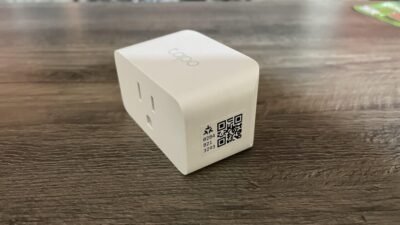
The implications for consumers are significant. Devices that were sold as “Works with Apple HomeKit” over the past decade may no longer function within Apple’s ecosystem unless they receive a Matter-compatible update. This includes smart plugs, light bulbs, door locks, thermostats, sensors, and a wide range of accessories from both major brands and smaller manufacturers. The challenge is that many of these products, particularly older or budget-tier devices, lack the hardware capability or manufacturer support needed to make the leap to Matter.
Matter Takes Center Stage in Apple’s Smart Home Strategy
Apple’s commitment to Matter has been building for several years. The standard was first announced in 2019 under the name “Project Connected Home over IP” (Project CHIP), with Apple as a founding member. Matter 1.0 launched in late 2022, and since then, Apple has steadily integrated Matter support into iOS, iPadOS, macOS, and tvOS. With the release of iOS 19 and the accompanying updates to HomePod software, Apple is now making Matter the exclusive pathway for new device integrations.
The company’s reasoning is straightforward from a strategic perspective. By consolidating around Matter, Apple reduces the engineering burden of maintaining two parallel protocols. It also aligns Apple’s smart home platform with an industry-wide standard, theoretically making it easier for device manufacturers to support Apple alongside competitors. But the transition comes at a cost — and that cost is being borne primarily by early adopters and loyal HomeKit users who invested in the ecosystem when Apple was still charting its own proprietary course.
Which Devices Are at Risk?
The full scope of affected devices remains difficult to quantify. Apple has not published a comprehensive list of products that will lose compatibility, leaving consumers to check with individual manufacturers about whether their devices will receive Matter updates. Some major brands have been proactive. Eve Systems, one of the most prominent HomeKit-first accessory makers, rolled out Matter firmware updates for many of its products over the past two years. Similarly, companies like Nanoleaf, Aqara, and Meross have updated significant portions of their product lines.
However, many devices — particularly those from companies that have exited the smart home market, gone out of business, or simply moved on to newer product lines — will receive no such updates. Smart home forums and communities have been buzzing with frustrated users cataloging their soon-to-be-orphaned devices. Products from brands like iDevices, Koogeek, and various white-label manufacturers sold under multiple brand names on Amazon are among those most likely to be left behind. For consumers who built their smart homes around these accessories, the June 25 deadline represents not just an inconvenience but a potentially expensive forced upgrade cycle.
Apple’s Broader Smart Home Ambitions Demand a Clean Break
The timing of this transition is not coincidental. Apple is in the midst of its most ambitious smart home push ever. The company is widely expected to release new home hardware in the coming months, including an updated HomePod lineup and potentially a long-rumored smart home display that would serve as a central hub for the Apple Home ecosystem. These products are being designed from the ground up around Matter and Apple’s new home architecture, making legacy HAP support an increasingly awkward appendage.
Apple’s move also reflects a broader industry reality. Google has similarly been pushing Nest devices toward Matter compatibility, and Amazon has been updating its Echo and Ring product lines to support the standard. The smart home industry has collectively decided that Matter is the future, and companies are now racing to shed the technical debt of their proprietary legacy systems. Apple, characteristically, is making this transition more swiftly and with less backward compatibility than its competitors — a pattern familiar to anyone who remembers the company’s abrupt transitions away from the 30-pin connector, the headphone jack, or Intel processors.
The Consumer Backlash and the Trust Question
The consumer response has been predictably mixed. On Apple’s support forums and across social media platforms including X, users have expressed frustration at what they perceive as planned obsolescence. Many invested hundreds or even thousands of dollars in HomeKit accessories based on Apple’s implicit promise of long-term ecosystem support. The fact that these devices may still function perfectly well as standalone products — but will lose their Apple integration — adds a layer of frustration. A smart light bulb that still turns on and off but can no longer be controlled through Siri or included in HomeKit automations is, for many users, functionally broken within the context of their smart home setup.
Industry analysts have noted that this kind of forced migration risks eroding consumer trust in the smart home category more broadly. If expensive connected devices can be rendered incompatible by a platform update with relatively little notice, consumers may become more hesitant to invest in smart home technology at all. This concern is particularly acute for Apple, which has historically positioned itself as a premium brand that justifies higher prices through longer product lifecycles and superior ecosystem integration.
What Manufacturers and Users Should Do Now
For device manufacturers still supporting legacy HomeKit products, the message from Apple is unambiguous: update to Matter or lose access to the Apple ecosystem. The Connectivity Standards Alliance has been working to streamline the Matter certification process, and chip manufacturers like Espressif and Silicon Labs offer relatively straightforward upgrade paths for devices with sufficient hardware capabilities. But for products built on older, more constrained chipsets, a firmware update may not be technically feasible, leaving manufacturers with the uncomfortable choice of either offering hardware replacements or simply informing customers that their products are no longer Apple-compatible.
For consumers, the immediate action items are clear. Check each HomeKit device’s manufacturer website or app for available Matter firmware updates. Where updates are available, install them before the June 25 deadline to ensure a smooth transition. For devices that cannot be updated, users face a decision: replace them with Matter-compatible alternatives, migrate to a different smart home platform that may still support them, or explore third-party solutions like Home Assistant that can bridge between legacy and modern protocols.
A Defining Moment for the Smart Home Industry
Apple’s decision to kill legacy HomeKit is more than a technical footnote — it represents a defining inflection point for the smart home industry. The move signals that the era of proprietary smart home protocols is definitively ending, replaced by a future built on the shared foundation of Matter. Whether that future delivers on its promise of universal interoperability and long-term stability remains to be seen. For now, millions of Apple users are facing the immediate and tangible consequences of a platform transition that prioritizes the future at the expense of the present.
The June 25 deadline will come and go, and the smart home will continue to evolve. But for those who trusted Apple’s ecosystem with their connected homes, tomorrow marks the day the old HomeKit dies — and the uncertain beginning of whatever comes next.