Newswise — If you’ve invested in—or are considering investing in—a smart home, you might have heard of Matter. This relatively new technology standard is generating buzz for its promises to simplify the smart home experience. But what is Matter, and how does it affect the way you build and manage your connected home?
As the global association for smart home professionals, CEDIA is here to help you understand how Matter works and why selecting Matter-enabled solutions installed by a professional integrator is still your best move.
What is Matter?
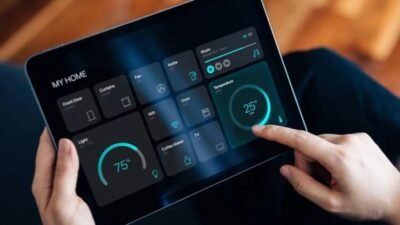
Introduced in 2022 by the Connectivity Standards Alliance (CSA), Matter is a smart home protocol backed by major players like Apple, Google, Amazon and Samsung. It’s designed to ensure that devices—no matter the brand—work seamlessly together. Think of it as a universal language for your smart home products. Whether you’re adjusting your thermostat, turning off the lights or checking your front door camera, Matter helps ensure your devices speak to one another without complicated workarounds or compatibility issues.
The standard is still evolving, with regular updates to support more device types and expanding functionality. Its latest release, Matter 1.4.1 (May 2025), introduced improvements like tap-to-pair and multi-device onboarding to enhance user experience and compatibility.
Why It Matters for You
Often, homeowners had to choose a single ecosystem or manage multiple smart home apps. That’s where Matter makes a difference. For homeowners, Matter promises greater device compatibility, simplified setup and increased security. That means fewer apps, less guesswork and a more seamless experience. But as the number of smart products grows, the complexity of designing a reliable and secure smart home also increases.
It’s also important to know that while Matter is a promising standard, it’s still relatively new. Support across device types is limited or inconsistent, and many manufacturers have not fully adopted it. As a result, most smart homes today—and for the foreseeable future—will still include a mix of protocols, from Wi-Fi and Z-Wave to Zigbee, Thread and various proprietary systems. Matter simplifies pairing, but it doesn’t replace the need for cohesive system design.
Enter the Professional Integrator
Even with a universal standard, smart home ecosystems are complex, and Matter is not a turnkey solution. That’s where a CEDIA-certified integrator comes in. Integrators are trained experts who specialize in designing, installing and maintaining multi-protocol home systems that include Matter and non-Matter devices. They understand how to configure a smart home ecosystem tailored to a homeowner’s lifestyle, so it works now and is also ready for what’s next.
“Matter brings important interoperability, but it takes a trained professional to architect true smart home systems that perform reliably and beautifully for years,” says Daryl Friedman, president and CEO of CEDIA. “Working with an integrator means no guesswork when choosing compatible devices, confidence in network security and robust automation and reliable performance across devices—lighting, HVAC, audio, security and more. Plus, you get ongoing support to keep your system up to date as technology evolves.”
Future-Proofing Your Smart Home
Matter is a major step forward, but it doesn’t eliminate the need for holistic system design and expert integration. In fact, as more devices join the ecosystem, working with a professional can help ensure you get the most from your investment—without sacrificing performance or privacy.
For more information on smart home tech or to find a certified smart home professional, visit https://cedia.org/homeowners.