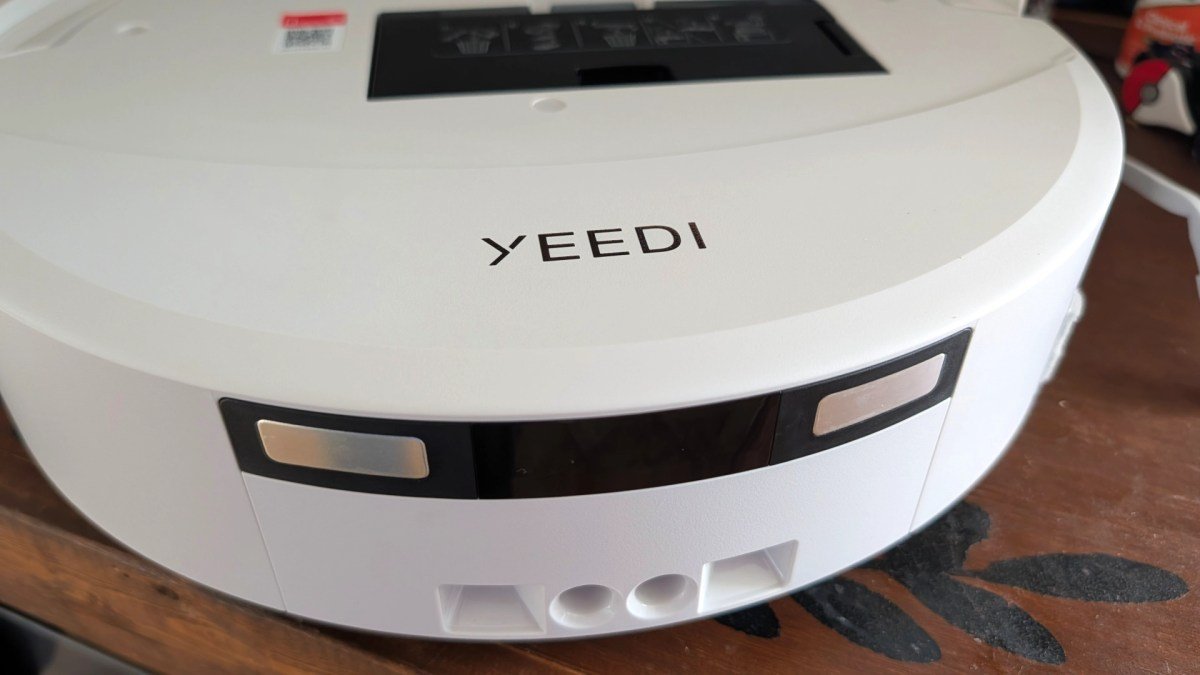
Over the last several weeks, the Yeedi M16 Infinity has been quietly working its way through my house. For context, I live in a two-level home with a mix of tile, low-pile rugs, and a couple of thicker area rugs that love to trap pet hair or debris.
There is a dog that doesn’t shed much but destroys its toys with consistency, leaving strings, fuzz, and stuffing all over the place. Also, you’ll find three adults who come and go with varying degrees of dirt in the process. One of them is an electrician who finds himself on plenty of commercial job site with their fare share of mud and muck. Try as we might to keep things contained, the dust and debris makes its way around the home.
This is the kind of environment where robot vacuums either prove their worth or end up demoted to light-duty touch-up work. The Yeedi M16 Infinity aims higher. It might be priced like a robot vacuum for first-time buyers, but it brings more to the table

On paper, it promises strong (30,000Pa) suction, a roller-style mopping system, and a dock that handles most of the messy parts for you. After living with it for weeks, running daily cleanings and a few deeper sessions, I have a clearer sense of what it does well, where it needs babysitting, and whether it can realistically take over most of the floor care in a busy household.
Design & Build
The M16 Infinity looks modern without trying too hard. The robot itself has a matte finish with subtle accents that keep it from feeling like a generic plastic puck. It does not scream “budget,” which is important if the dock is going to sit in a visible part of the house. I particularly like the finish and its intentional textured print as it’s different from the generic whites and blacks often found in homes.
For homes with pets, mixed flooring, and constant foot traffic, the Yeedi M16 Infinity proves itself as a dependable, low-effort upgrade.
Height clearance is solid. It slides under my living room sofa and other pieces of furniture without issue, reaching the dust-heavy zones that upright vacuums often miss unless I go out of my way. If you have ultra-low furniture, you will still want to measure, but in a typical setup, it handles under-furniture cleaning well.
The brush layout is where Yeedi made a more interesting design choice. The conical main brush is meant to guide hair toward the center instead of wrapping tightly around the edges. In practice, I did notice less hair tangling compared to traditional cylindrical rollers. I still check it weekly, but I have not had to cut away thick coils of hair the way I have with earlier generation robot vacuum cleaners. I suspect long term it would be an easy case of grabbing and pulling out random pieces.

The water tank and internal components are not meant for daily access. Most of the interaction happens at the dock. The OMNI station is on the larger side, similar to other self-empty and self-washing docks I have used. It needs some wall clearance and a bit of breathing room, so this is not ideal for a cramped apartment entryway. In a laundry room or tucked against a wall in a living space, it blends in reasonably well.
Build quality feels sturdy. The wheels handle transitions between hardwood and rugs confidently, and it can climb typical thresholds without drama.
Setup & Mapping
Setup was straightforward. Attach the side brush, plug in the dock, fill the clean water tank, download the Yeedi app, and connect to WiFi. The initial mapping run took less time than I expected. It moved methodically, hugging walls and scanning open spaces with LiDAR.
The first map was accurate enough to auto-segment most rooms correctly. I did a little manual editing in the app to fine-tune room boundaries, especially around a hallway that tends to confuse robots, but overall it understood the layout well.
Obstacle detection is solid but not perfect. It reliably avoided larger objects like shoes and furniture legs. Loose charging cables are still a risk. It has improved avoidance compared to older midrange models I have tested, but I would not leave a pile of cords on the floor and expect miracles.
If you can spot check for any longer cables or pooled cords for lamps or other household items, I’d suggest doing so, lest you end up with something twisted up. Some of my dog’s toys are comprised of ropes and when she chews them up, the frayed stuff is at risk of getting caught up. And with up to 30,000Pa of suction, it can potentially get ugly quick.

After a few runs, navigation settled into predictable patterns. It cleans in neat rows, returns to the dock to recharge if needed, and resumes where it left off. I have not experienced major mapping corruption or random “lost” errors, which is something I pay close attention to.
I’ll probably fine-tune things one more time here to really dial things in, but that’s more of a personal decision and compulsion than a need.
Vacuum Performance
This is where the M16 Infinity earns most of its credibility.
On hard flooring and tile, it is thorough. Fine dust, pet hair, and everyday debris disappear in a single pass on standard suction. Edges are handled reasonably well thanks to the side brush, though like most round robots, it cannot fully dig into tight ninety-degree corners.
On low-pile rugs, suction is strong enough to lift embedded hair. I tested it after a few days of dog toy destruction and the junk that finds its way into the home during early spring, and the dustbin in the dock had the receipts to prove it was pulling up more than surface-level debris.
Thicker area rugs are more of a mixed bag. It can climb onto them without issue and automatically boosts suction. However, for deep, ground-in dirt on high-pile carpet, a traditional upright vacuum still does a more aggressive job. That is not a knock specific to Yeedi; it is just the reality of robotic form factors.
For daily maintenance, though, it keeps carpets looking consistently clean. I have found that running it every day or every other day prevents the need for heavy manual vacuuming as often. With up to 30,000Pa suction you’re going to grab things that cheaper models won’t.
Pet hair performance is one of its strengths. The combination of suction and the anti-tangle brush means less time spent pulling hair off rollers. I still check the side brush for buildup, but the main roller has been surprisingly manageable.

Can it replace a traditional vacuum entirely? In my house, it reduces the need for one dramatically. I bring out the upright for deep cleans and stairs, but for routine floor care, it carries most of the load. No matter what brand or model robot I’m using in the home, I’ll still break out the upright unit for cleans every so often.
Mopping Performance
The roller-style mopping system is more advanced than the typical vibrating pad approach. Instead of dragging a damp cloth behind it, the rotating roller actively scrubs.
On sealed flooring and tile, it removes dried footprints and light kitchen splashes without issue. I intentionally left a small sticky spot near the sink and let it run. It took two passes, but it cleared it without manual scrubbing.
Water control is consistent. Floors are left slightly damp and dry within minutes. I have not seen excessive pooling or streaking, which is a common complaint with simpler (cheaper) mopping robots.
Carpet detection works reliably. When mopping, it avoids rugs entirely or adjusts behavior to prevent soaking them. I have not had any accidental damp carpet moments, which is reassuring.

That said, this is still maintenance mopping, not a replacement for deep hand-scrubbing. It keeps floors fresh and handles everyday grime well, but for heavy, caked-on messes, you will still intervene occasionally.
Docking & Automation
The OMNI station is where the vacuum returns to auto-empty the dustbin, wash the mop roller, and dry it. Well, of course it also charges the unit up, too, but you knew that.
Auto-emptying is loud but brief. It sounds like a small shop vacuum for several seconds, then it is done. It has not clogged or failed to empty during my testing.
Mop washing is surprisingly thorough. The dirty water tank proves it is pulling real grime out of the roller. If you’ve never had the privilege of such an experience, it’s a bit eye-opening, if not slightly embarrassing. Drying prevents that musty smell that some older mop systems develop.
In day-to-day use, my wife and I refill the clean water tank and empty the dirty tank every few days, depending on how often it runs. The dust bag in the dock should last weeks in an average household. We’re in the weird time of year where small rocks, dirt, debris, and other junk finds its way into the home. Snow one day, rain the next, and then it’s a few days of high traffic as the weather allows for plenty of in-and-out. Thus far, the Yeedi M16 Infinity feels up to the task of keeping
Overall, everything feels genuinely hands-off. Not maintenance-free, but low effort. You don’t really have to think about it, and that’s all I can ask for.

App Experience (Android Focus)
The Yeedi app on Android is clean and mostly intuitive. The home screen shows the map, battery status, and quick controls.
Room editing is simple. You can merge, divide, rename rooms, and set no-go zones. Scheduling works reliably. I set recurring cleans for weekday mornings, and it has stuck to them without skipping.
Integration with Google Assistant works for basic commands like starting and stopping cleaning. If you are deeply invested in advanced smart home automation platforms, options are more limited. For standard Android users, though, it integrates well enough.
The only minor frustration I encountered was some app lag when loading the map remotely. It has not broken functionality, but there is maybe some room for polish. And really, this isn’t something I do all that often so I am not too worried.
Noise & Day-to-Day Living
On standard suction, the noise level is manageable. I can work in the same room while it runs. Turbo mode is noticeably louder but still within reason.
The loudest moments are dock emptying and mop washing. I would not schedule those in the middle of the night if you are a light sleeper. Similarly, if you have children who go to bed early, or toddlers with regular nap times, you may want to schedule things around that.

In daily life, it fades into the background. It moves predictably, does its job, and returns home without needing constant supervision. Again, that I don’t have to think about it perfectly suits my needs.
Maintenance & Long-Term Ownership
Weekly, I wipe sensors and check brushes. The filter needs occasional tapping out. The mop roller benefits from inspection, even though the dock cleans it. As much as these are largely hands-off devices, it’s wise to regularly check on things to make sure things run optimally.
Consumables like dust bags, filters, and brushes will add to long-term cost. That is true of any self-empty system. Based on my experiences with Yeedi, nothing about this model seems unusually expensive in that regard.
The hardware feels durable so far. Time will tell beyond the warranty period, but nothing has felt fragile during testing. I’ve used other Yeedi models in the past and found they tend to stand up to time just so long as you do the preventative stuff and keep things clean.
Value & Who It’s For
The Yeedi M16 Infinity sits in an interesting space. It offers features often associated with higher-end models, particularly the roller mopping system and advanced dock, without pushing into extreme flagship pricing.


It is ideal for busy households with pets and mixed flooring who want strong daily maintenance with minimal involvement.
If you live in a small apartment with mostly carpet and rarely mop, you might not need this level of dock complexity. Likewise, if you expect a robot to fully replace deep manual cleaning in a high-pile carpeted home, you may want to temper expectations.
For most typical homes with hard floors and area rugs, it strikes a strong balance. Our home changes throughout the year based on the season so we’re swapping rugs in and out, moving furniture around, and adapting to seasons. We’ve gone through one major “shakeup” in the home with the Yeedi M16 Infinity and it didn’t so much as flinch.
Verdict

Awarded to products with an average rating of 3.75 stars or higher, the AndroidGuys Smart Pick recognizes a balance of quality, performance, and value.
Products with this distinction deserve to be on your short list of purchase candidates.
After several weeks of real-world use, the Yeedi M16 Infinity has proven itself dependable and genuinely helpful. It keeps floors consistently clean, manages pet hair better than many midrange competitors, and delivers mopping performance that goes beyond surface wiping.
The app could feel snappier, and like all robot vacuums, it cannot fully replace deep manual cleaning. As a daily floor maintenance partner, it significantly reduces workload and keeps the house looking presentable with very little effort.
It is not perfect, but it’s a great bargain. It’s currently sitting at $599 on Amazon which makes it a fantastic value proposition. Its suggested retail price of $999 is a little steep if I’m being honest, but anything short of that is worth considering.
For households that want premium-style automation without stepping into ultra-premium pricing, it earns a clear recommendation.