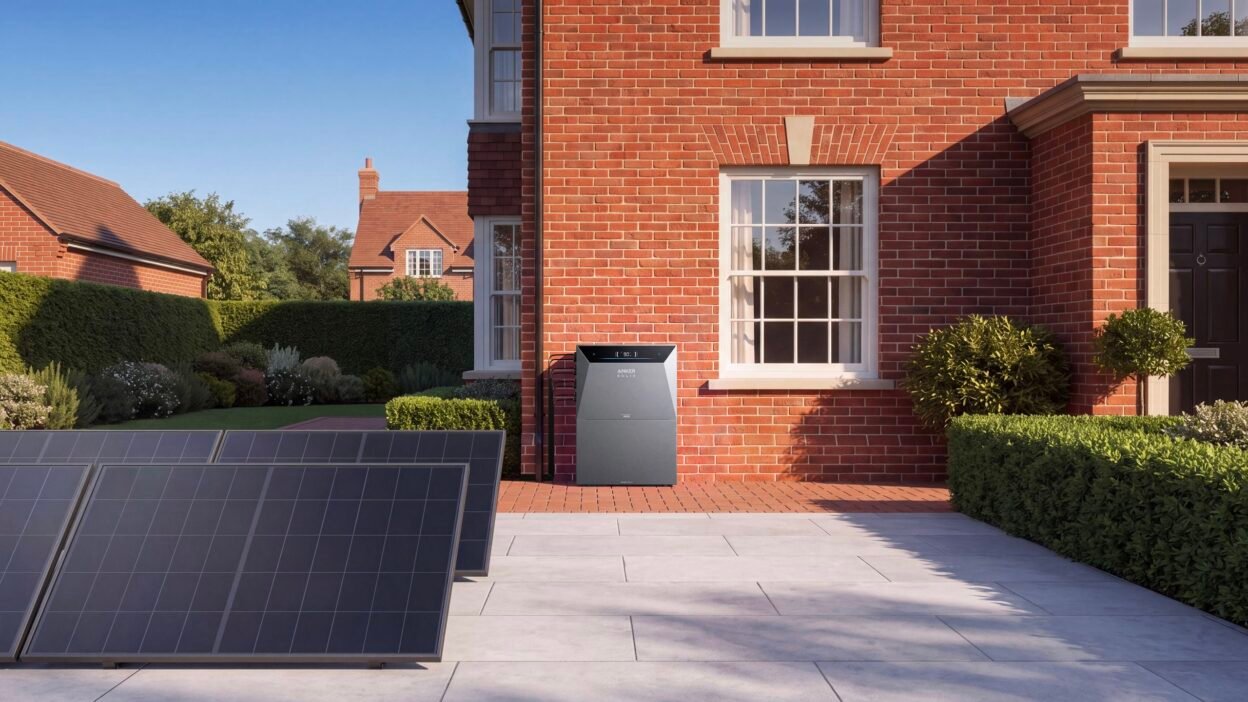
Anker Solix has announced the Solarbank 4 Pro for the UK, a new home solar battery system that starts with 5kWh of storage and can be expanded up to 30kWh. The system first launched in Europe back in May and offers up to 5,000W of solar input and 2,500W AC output.
The timing makes sense as the UK’s new plug-in solar rules have just come into effect, allowing compliant solar kits to connect to a standard household socket. I’ve already covered 10 expert-approved things to know before buying, but one of the important points is that plug-in batteries aren’t legal yet. That means the Solarbank 4 Pro – along with other similar home batteries – currently needs to be hardwired into your home’s consumer unit by a registered electrician.
The Anker Solix Solarbank 4 Pro is available to pre-order from today for £1,699 (around $2,308). Anyone ordering during the pre-sale period will also get an Anker Solix Smart Meter Gen 2 at no additional cost, which is used to monitor energy flowing around the home and help the system decide when to charge and discharge.

(Image credit: Anker)
The battery itself has a modular, stackable design, so you can start with 5kWh and add more storage later, up to a maximum of 30kWh. Anker also says additional capacity can be added without requiring a second installation. There’s also 5,000W MPPT solar input with support for up to 12 solar panels, depending on your setup.
Despite all that, the main unit is relatively compact, with the battery and inverter combined into a single system. Inside, it uses automotive-grade LFP battery cells rated for 10,000 charge cycles.

(Image credit: Anker)
When paired with the Anker Solix Smart Meter Gen 2, the system can monitor energy flowing around your home in real time, adjusting how it uses solar, stored and grid electricity. Anker claims this could save a typical UK household up to £770 a year, with an estimated payback period of around 3.3 years. Of course, actual savings will vary considerably depending on your electricity tariff, energy usage and how much solar power you generate.
Interestingly, Anker has already designed the Solarbank 4 Pro with future plug-in battery storage in mind. If UK regulations eventually change to allow home batteries to connect directly to standard sockets, Anker says the hardware will be ready to support it. For now, though, you’ll still need to have it professionally installed and hardwired into your home’s consumer unit.