
Imagine coming home to lights automatically turned on, with a robot waiting to help put away groceries – all made possible by sensors and artificial intelligence systems that anticipate your needs without being asked.
As homes become smarter and more connected, questions are also emerging about privacy, security and how much personal data residents may be willing to share in exchange for convenience.
When contacted, Malaysia’s National Cyber Security Agency (Nacsa) acknowledges the potential for AI-powered smart homes to offer greater convenience, efficiency and automation.
“However, the increasing interconnectivity of digital systems also expands the cyber risk landscape, making cybersecurity a critical enabler of the security, reliability and resilience of smart home ecosystems,” a spokesperson says to StarLifestyle.
The agency believes that the key consideration is ensuring smart home ecosystems are designed, developed and operated securely throughout their lifecycle.
“In line with the Artificial Intelligence Cyber Security Guidelines (AICG) currently being developed by Nacsa, developers should adopt a security-by-design approach that integrates cybersecurity considerations from planning and development through deployment, operation, maintenance and eventual decommissioning,” says the spokesperson.
He adds the AICG is intended to provide guidance on securing AI systems and addressing emerging AI-specific cybersecurity threats, including adversarial attacks, data poisoning (a type of cyberattack where threat actors manipulate or corrupt the datasets used to train AI and machine learning models to produce inaccurate results), model manipulation (tampering with or swapping a model so it behaves maliciously), prompt injection (the use of deceptive text to trick AI into following otherwise prohibited instructions) and unauthorised access to AI systems.
“Traditionally, entities in the property development sector may not have been viewed as operators of critical digital infrastructure. However, with the growing adoption of AI-enabled smart home technologies and increasingly interconnected digital ecosystems within residential developments, certain systems and platforms may assume greater significance from a cybersecurity perspective.
“Depending on their function, scale and potential impact on the delivery of essential services, such systems may be assessed for possible designation as National Critical Information Infrastructure (NCII) under the Cyber Security Act 2024 [Act 854],” the spokesperson explains.
He adds that relevant NCII entities would be required to comply with the applicable obligations under Act 854, including requirements relating to cybersecurity risk assessment and audit, incident reporting, and compliance with the relevant regulations, directives and codes of practice under Act 854.
When smart home services rely on centralised platforms, the spokesperson says the impact of a cybersecurity incident may extend beyond individual users, potentially affecting the continuity, availability and reliability of services depended upon by an entire community.
“As such, organisations deploying these technologies should adopt a risk-based approach to cybersecurity, supported by continuous monitoring, regular cybersecurity risk assessments and independent audits, security testing, and incident response preparedness to strengthen resilience against evolving cyber threats,” the spokesperson adds.
Home sweet home
In Malaysia, property developer I-Bhd has unveiled AI Living, a residential tower with 500 units at i-City in Shah Alam, Selangor, where native intelligent systems and robots are envisioned as part of everyday life.
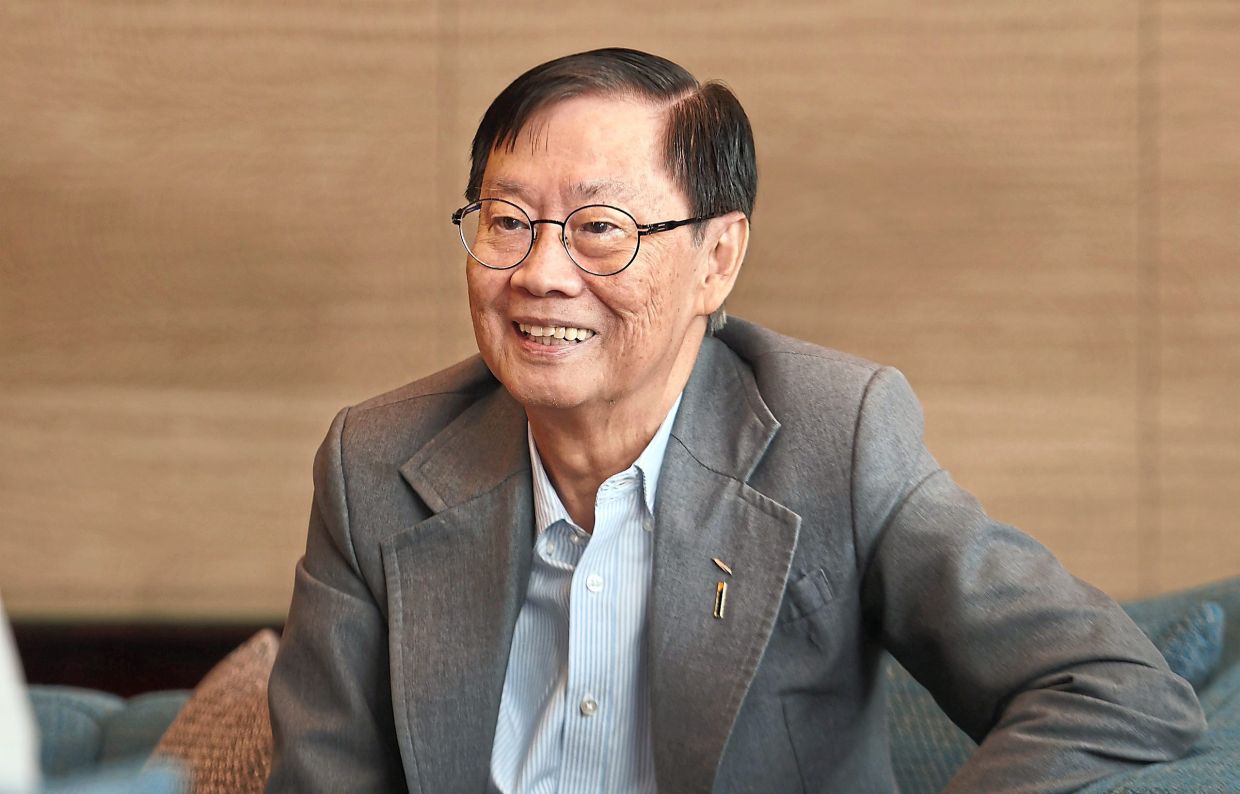
For residents, I-Bhd non-independent non-executive director Datuk Eu Hong Chew says AI Living means having integrated home systems and robots that can assist with daily tasks and household coordination.
“If you’re going to leave the house, you can tell the robot to arrange for the car to wait at the lobby. Then a facial recognition system helps to inform you that your children are back from school. In theory, I should have less to worry about in terms of the chores in the house if I can get a robot to take care of it,” says Eu during an interview in i-City.
The company is partnering with China-based Agibot on the robotics and AI component. In a statement, Agibot chief operating officer Lv Suhe explains that robotics will be integrated as a foundational element of the smart home infrastructure at i-City.
“Instead of homes designed solely for people, we are now looking at homes designed from day one to be shared seamlessly with intelligent, service-oriented robots,” she says.
Eu explains that AI Living is an expansion of i-City’s concept from a digital city to building its own applications to support advanced use of AI and robotics for residential living.
“This is not something we’re developing from scratch, as we already have the supporting infrastructure in place, such as dual source power supply, proprietary dual-fibre connectivity network and a data centre. With the foundation set, we already have what we need to develop our own AI and robotics applications,” says Eu.
Peace of mind
When it comes to securing AI and digitally equipped homes, Mesiniaga deputy chief executive officer Chua Seng Teong says that adherence to national cybersecurity requirements and the Personal Data Protection Act (PDPA) is a must.
Mesiniaga is partnering with I-Bhd to develop an Urban Intelligence Platform to enable AI-native residential living at i-City.

“For us, security has always been in our DNA, built in from the start, and not an afterthought,” Chua says, adding that Mesiniaga has extensive experience maintaining large government systems.
He adds that any data that needs to be transferred will be encrypted and stored securely.
“But what we try to do is really anonymise, because for us, it’s really just seeing overall patterns in the city,” he says.
According to Chua, data gathered in such scenarios would then be stored on i-City’s own servers, with Mesiniaga acting as a data processor. While attention is being given to securing resident data, Chua emphasises that consumers need to be given a choice about whether to allow their data to be collected and used in the first place.
“All these things (cybersecurity and data handling practices) we put in place. But what is important is making it opt-in for the consumers. They decide what to share. Of course, the more they share, the more customised it gets,” he says.
At the broader ecosystem level, Eu says data governance, cybersecurity and system coordination are being developed together with technology partners, including through the UrbanOS platform architecture with Mesiniaga.
“This includes considerations around secure data handling, user consent, access controls and responsible AI deployment,” adds Eu.
The road ahead
In the long run, Chua hopes for technology to have a direct effect on the experience of people living and working in the community. Yet he believes there are several key challenges that need to be overcome.
“One is, the technology needs to work, I’d say, very seamlessly and frictionless to the user. Meaning, it has to be in the background. You don’t even know the technology is there, but you use it.
“The second thing is coordinating all these parties. Each has its own technical standards, ways to connect, language, and whatnot. And to work it all as one, it is quite a challenge,” he says.
Chua highlights that many systems are now siloed, meaning that they function in isolation or just in their own ecosystems. This is something that Mesiniaga’s currently in-development Luma system seeks to address.
He says that Luma is designed to integrate and orchestrate the mismatched standards and connection protocols used across various AI, robotics, and smart home systems into a unified experience for residents.
Another challenge he points out is the need to build trust in all parties, saying, “As we build, we don’t want to build it as a point in time now, we want to build it for the future.”
“It means all of us have to be very open with our roadmaps. And that’s why we went and came together. Then we can start to plan forward and say, okay, the trust is there,” he says.
Chua further says that Mesiniaga aims to achieve an integrated system capable of coordinating by itself and responding to residents’ needs. For instance, in the event of a fire, the system could immediately alert building security or the nearby fire brigade, open up door access and have a robot guide residents through thick smoke.
Taking care of seniors
The AI Living concept is also conceived to support elderly residents, particularly those living independently. For example, Eu says if a fall occurs at home, built-in sensors can help trigger an alert that prompts a response from the security system.
Chua envisions a robot being able to help with lifting heavy objects into the elevator or assist with food delivery.
On that, Eu says: “We’re looking at introducing robots-as-a-service where residents can subscribe to features with some possible options including to assist with domestic chores and childcare.”
The emergence of advanced technology assisting elderly residents at home comes at a timely moment, as Malaysia faces growing demographic pressure as an ageing nation.
According to Prof Dr Teh Pei Lee, director of the Gerontechnology Laboratory at Monash University Malaysia, Malaysia’s population aged 65 and above stood at about 8%, or roughly 2.89 million out of 34.2 million people in 2025.

“By 2040, the Department of Statistics Malaysia (DOSM) estimates that more than 17% of the population is expected to be aged 60 and above,” she says during an interview in Subang Jaya.
She believes technologies with the strongest potential to assist the elderly are those that support independence, safety, health management and social connection.
“In my view, passive and privacy-sensitive monitoring systems are among the most promising,” says Prof Teh, adding that these systems should include fall detection, motion and inactivity monitoring, stove or gas alerts, door sensors, bed-exit sensors, and water-leak detection.
She says such systems can help older adults remain at home safely while giving caregivers timely alerts.
“Importantly, they should be designed to minimise intrusive surveillance. For example, non-camera sensors may be more acceptable in many homes than video monitoring,” she adds.
Prof Teh also sees strong potential in socially assistive technologies such as voice-based interface, conversational agents and simple robotic companions. However, she adds that they have to be carefully designed and tested to see if older Malaysians can trust these technologies to work for them.
“The key question is not whether the technology is impressive, but whether it improves safety, dignity, independence and caregiver support in real Malaysian care settings,” she adds.
The nation, she says, should develop a risk-based framework for AI and robotics in elder care.
“Technologies used in private homes for safety, health monitoring, mobility support, or cognitive assistance should be treated as high-impact systems because errors can affect health, dignity, and autonomy,” Prof Teh adds.
Nacsa’s spokesperson says as Malaysia advances towards a more connected digital society, cybersecurity remains essential to maintain the security, reliability and resilience of AI-enabled technologies and services.
“The digital infrastructure embedded within future residential developments should be afforded the same level of attention and protection as the physical infrastructure on which communities depend,” adds the spokesperson.
Living with tech
Prof Teh states that families and policymakers should pay attention to consent and control and how the data is being gathered, stored and processed.
“For example, monitoring for fall risk may be reasonable, but continuous video surveillance in bedrooms or bathrooms would be highly intrusive,” she says.
However, Eu explains that AI Living is not about continuous surveillance inside homes.
“There is an important difference between sensing and surveillance.
“Many AI-enabled functions rely on environmental sensing – such as occupancy, temperature, movement or wellness indicators – to improve comfort, safety and efficiency, without necessarily recording or storing private visual footage,” he adds.
According to Eu, privacy-sensitive areas such as bedrooms and bathrooms would naturally require stricter safeguards, permissions and usage limitations.
“The goal of AI and robotics is to support convenience, wellness and operational efficiency – not to intrude into private life,” Eu stresses.
He adds: “Compliance with Malaysia’s PDPA requirements and national cybersecurity standards will be essential parts of implementation.
“We believe trust and user confidence are fundamental for long-term adoption of AI Living technologies.”
The AI Living project at I-City is expected to be completed in 2030.
As an avid reader of science fiction by authors like Isaac Asimov, Eu is aware of how safety must come first when humans interact with technology.
“Ultimately, humans must decide and remain in control. That is part of the safety principle where it cannot override human agency.
“Science fiction helped me imagine how people should live with technology. It is no longer just a technology issue, but a question of human-technology interaction,” he says.