Houston City College is home to Texas’ first Smart Building Technology program, preparing students for careers in the rapidly growing field of integrated smart building systems.
The program prepares students for careers installing, integrating and maintaining smart building systems in residential and commercial settings. While traditional trades such as plumbing and electrical work remain essential across the Gulf Coast, the rise of interconnected systems has created demand for technicians with specialized skills.
What is smart building technology?
Smart building technology connects a building’s low-voltage systems—such as lighting, internet networks, security cameras, access control, audio/video equipment and energy management tools—so they can work together as one integrated system. Instead of operating independently, these technologies communicate to create buildings that are more connected, efficient and easier to manage.
Program coordinator Matt Adams said the field extends beyond home automation.
“It’s about how technology enhances lives,” Adams said. “There are many applications—from improving accessibility and safety to making buildings more efficient, and we’ll see more.”
As connected technology becomes standard in homes and commercial buildings, smart building technology is improving safety, accessibility and energy efficiency. From helping older adults live independently to creating secure and sustainable buildings, the field continues to expand—along with the need for professionals.

A wide range of careers
Due to the industry’s diverse technologies, graduates have multiple pathways.
Students can pursue careers in:
- Structured cabling and integrated networking
- Audio-visual and lighting systems
- Smart home and commercial automation
- Energy management
- Security cameras and access control
- Fire alarm and life safety systems
- Sales, estimating, project planning and technical support
“The depth of this industry is endless,” Adams said. “The constant need for technicians exists, and as more people realize the potential of these technologies, the demand for trained professionals will accelerate.”
Learning by doing in the lab
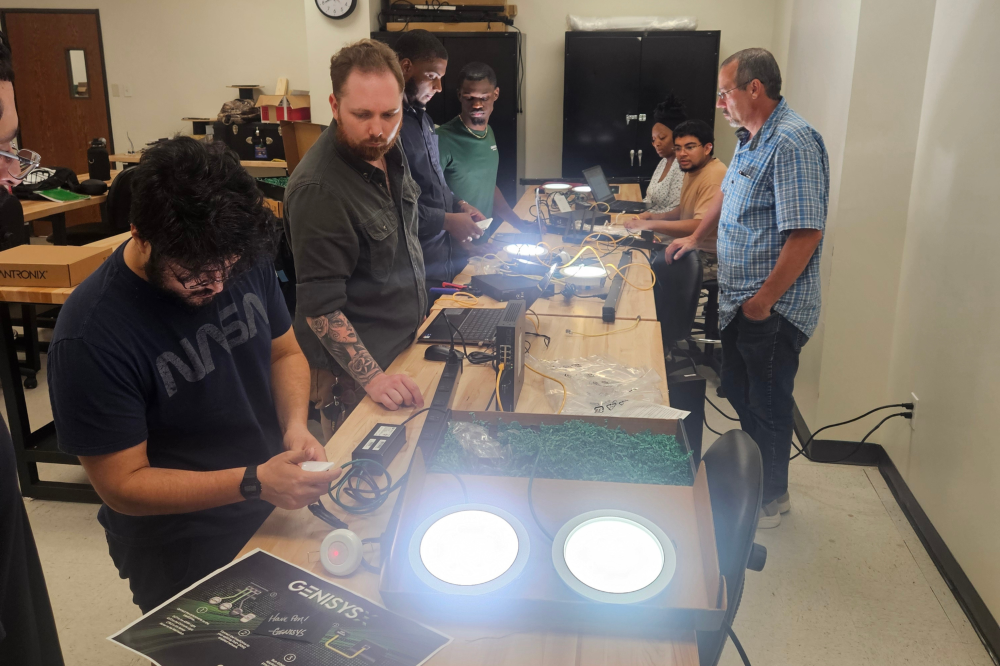
To prepare students for immediate workforce entry, the curriculum emphasizes hands-on, immersive learning. Instead of relying only on lectures, they spend most of their time in the program’s two advanced labs taking systems apart, rebuilding them and testing configurations in real time.
Adams stressed that developing critical thinking is as important as manual labor.
“The balance you’re trying to strike in learning is important,” Adams said. “Sometimes, industry people only want you to know how to work with your ten fingers. That’s great, but you also have to understand the ‘why’ and ‘how’ behind your actions. If you only know the steps, you’re limited when something breaks—you have to think it through and fix it from the ground up.”
To mirror real-world job demands, Adams builds lab exercises to push students beyond their comfort zones. In a recent assignment, they worked with an unfamiliar network switch. With a multiweek deadline, they had to configure it from scratch, using foundational networking principles to figure out the system independently.

Flexible paths and certification options
The program serves a wide range of learners, from traditional college-aged students to military veterans, career changers and university graduates seeking to build technical skills.
To support different goals and timelines, the curriculum is organized into three milestones that allow students to enter the workforce at different stages or continue toward a full degree:
- Level 1 Certificate: Six-course foundation in structured cabling and low-voltage networking, designed for quick workforce entry or entrepreneurship.
- Associate of Applied Science: Two-year program covering corporate infrastructure, security surveillance, access control and life-safety systems.
Starting this fall, students can complete the whole level 1 certification in one semester.
Beyond career-track students, the program opens its doors to local residents with no industry plans. A standalone course, Smart Home Integration, allows homeowners to learn to safely set up, manage and optimize connected technology in their homes.
Want to learn more?
Admissions and enrollment is open for HCC’s new Smart Building Technology program.
Visit HCC’s website at www.hccs.edu to learn more and apply.

The above story was produced by Multi-Platform Journalist Chloe Chapel, with the Community Impact’s Storytelling team, using information solely provided by the local business as part of their “sponsored content” purchase through our advertising team.